Net Neutrality Monitor analyses how Internet Service Providers resolve, block and inject DNS traffic. The platform tracks servers under examination, surfaces country-level reports, and publishes a live blacklist of injected addresses.
View Country ReportsWhat the platform does
Net Neutrality Monitor provides real-time analysis of the censorship systems used by Internet Service Providers. It tracks DNS servers currently under examination, lists known DNS servers that respond correctly to specific tests, and produces country reports on the types of blocking detected — from gambling and file-sharing to streaming and image hosting.
- DNS probes
- Country reports
- Injected addresses
- ISP scoring
Coverage across the monitored regions
Country reports are available for China, Colombia, Denmark, Estonia, Finland, Italy, Korea Republic of, Sweden, Switzerland, Thailand, Turkey and additional regions as new probes are activated.
- 11+Countries with published reports
- LiveDNS server list under examination
- CC BY 2.5 IT / BY-SA 3.0Content licensing applied
- OpenDonations and probe submissions
Where Internet Censorship Probes Concentrate Across Ten Countries
Internet censorship is rarely uniform within a national border. A website may load on one Australian ISP and fail on another, while a domain can be reachable through a public resolver but blocked by a provider-operated DNS service. That makes probe volume a useful starting point: it shows where people are testing access, investigating filtering, or checking reports from other networks.
The ranking below reflects the countries attracting the greatest concentration of recorded checks in the Net Neutrality Monitor database. It should be read as an indicative research view rather than a universal measurement of censorship. Probe numbers reflect user interest, media attention, technical curiosity, and the availability of test targets as much as they reflect government policy.
For Australians, the subject is closer than it may seem. A user in Sydney, Melbourne, Brisbane or Perth can experience a different result from someone on another network, even when both are visiting the same service. The NBN market, mobile networks, public DNS resolvers and household filtering products create several points where access can change.
The database is also a living project. New URLs, IP addresses, DNS responses and country observations can alter the order over time. International shutdowns deserve special attention because they can distort ordinary measurements, as explained in this analysis of shutdown effects.
| Rank | Country | What drives repeated probing |
|---|---|---|
| 1 | United States | Large internet population, platform disputes and comparative testing |
| 2 | India | Enormous user base, regional orders and frequent domain checks |
| 3 | Russia | Blocking campaigns, sanctions-related access issues and DNS interference |
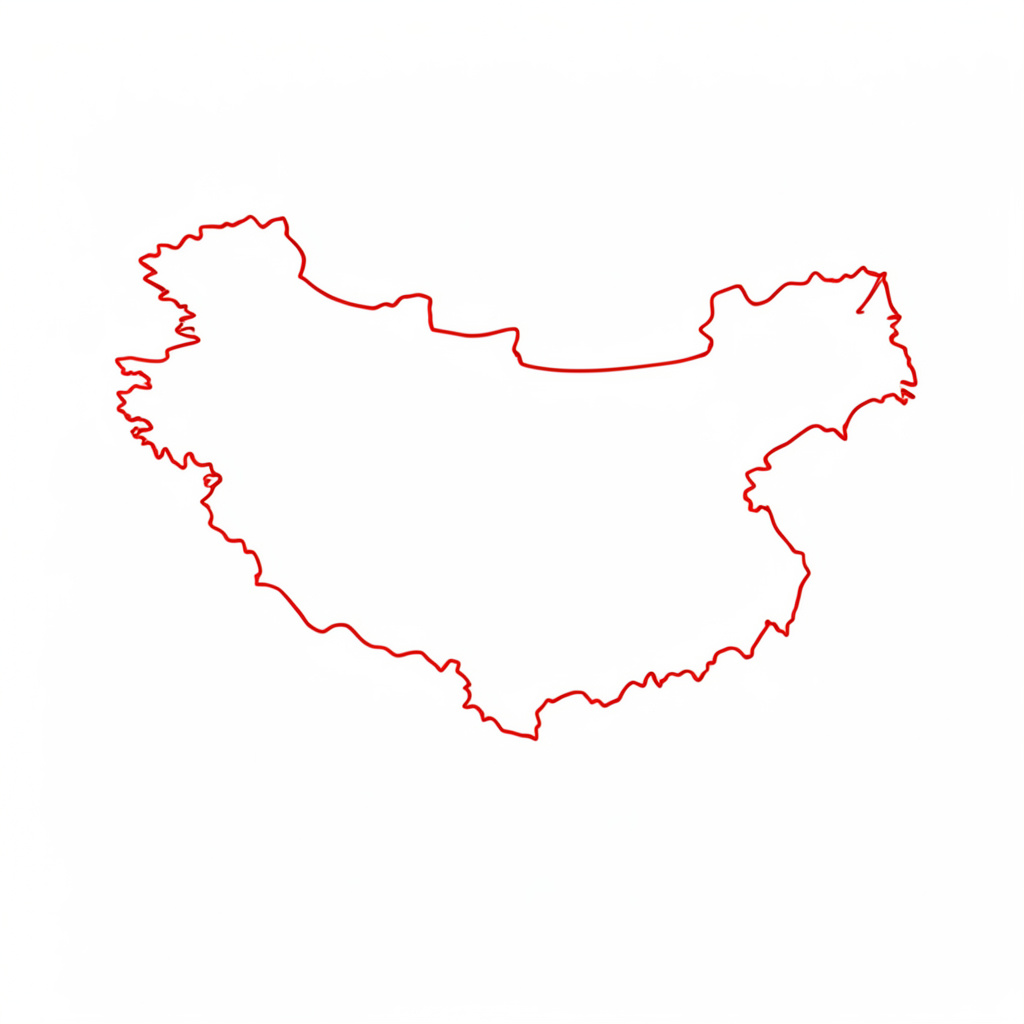
| 4 | China | Extensive filtering and strong international interest in reachability |
| 5 | Iran | Shutdowns, platform restrictions and circumvention research |
| 6 | Turkey | Court-ordered blocking and rapidly changing access conditions |
| 7 | Indonesia | Provider filtering, local regulation and high mobile usage |
| 8 | Australia | ISP-level blocks, safety debates and domestic comparison testing |
| 9 | United Kingdom | Regulatory changes, age checks and DNS-level experiments |
| 10 | Germany | Copyright enforcement, court decisions and resolver comparisons |
How to read the ranking
The most probed country is not necessarily the country with the most severe censorship. A high position may indicate a large online population, a well-connected research community, a controversial platform, or many people checking whether a reported block is still active. The United States illustrates this clearly: its size and commercial importance generate a great deal of comparative testing, even though filtering is usually fragmented rather than centrally imposed.
Probe data becomes more useful when several signals agree. A failed page request, a DNS alteration, a redirect, an address-level block and a normal response each tell a different story. Repeated tests from separate networks can help distinguish a short-lived outage from deliberate filtering.
Country labels also need caution. They usually describe the network location or jurisdiction associated with a test, not the identity of the person who submitted it. A traveller using hotel Wi-Fi, a researcher operating a virtual server, and a resident using a mobile connection may all produce different observations under the same country name.
Why India attracts so many checks
India combines a vast internet population with a complex regulatory environment. Blocking orders can be issued at national or regional level, and providers may apply them differently. This produces a steady need to check domains, mirrors, news sites, file hosts and political material across multiple networks.
The country’s mobile-first habits make DNS and provider behaviour especially important. A site that appears available through a browser may still be affected by a resolver response, an application-specific block or a network policy that changes between mobile and fixed-line access. In a database of submitted tests, this variety naturally creates a large number of observations.
India also rewards repeated measurement. A result from Delhi may not explain a result from Bengaluru or a smaller regional market. The same target can move between reachable and inaccessible as orders change, providers update filtering lists, or a blocked address is replaced.
Russia, China and Iran show the value of context
Russia, China and Iran draw probes because access restrictions are closely tied to wider political and technical events. Researchers may test whether a service is blocked by domain, IP address, protocol or application category. They may also compare the impact of a shutdown with ordinary filtering, since a national connectivity failure can make every destination appear unavailable.
China is a particularly important case for interpretation. A failed connection may reflect the Great Firewall’s domain, keyword, protocol or address controls, while the same destination remains reachable from outside the country. China’s position in a probe ranking therefore reflects both the scale of filtering and the intense international effort to understand it.
Iran adds another layer through temporary disruptions and platform restrictions. When connectivity is throttled or interrupted, DNS results can become less informative than transport-level tests. This is why Net Neutrality Monitor records multiple kinds of evidence rather than treating every failed page load as proof of a blacklist entry.
Turkey and Indonesia reveal provider-level variation
Turkey’s ranking is shaped by frequent legal and administrative interventions. News outlets, social platforms and individual pages can face different treatment, and access conditions may change quickly after a court or regulatory decision. Monitoring is most valuable when it preserves the date and network context of each observation.
Indonesia presents a different pattern. High mobile usage and a large number of local providers create a broad testing surface. Filtering may involve pornography controls, gambling restrictions, copyright complaints or politically sensitive material. A domain can therefore be blocked for reasons that are not obvious from a simple browser error.
These countries demonstrate why a blacklist should never be treated as a complete national record. It is a snapshot of particular targets and networks. The database can show patterns, but interpretation still requires attention to provider, resolver, timestamp and the type of response returned.
Why Australia appears in the ten
Australia’s position is significant because it shows that censorship monitoring is relevant in an open, well-connected market. Internet users regularly encounter mandatory or voluntary blocking mechanisms, court-directed copyright restrictions, scam and malware interventions, and family-safety products. The result can differ between a Telstra, Optus, TPG or smaller NBN service, especially where DNS filtering is involved.
Local geography adds practical complications. A connection in central Melbourne is not a perfect proxy for one in regional Queensland or Western Australia. Mobile coverage, satellite links and smaller regional providers can produce different routes and resolver behaviour. Australian users comparing a home NBN connection with a phone hotspot may therefore contribute genuinely distinct evidence.
Public debate also drives local probes. Discussions about age assurance, online safety and gambling regularly prompt people to check which domains are reachable and how blocks are implemented. In a country accustomed to comparing broadband plans and switching between providers, those side-by-side tests are particularly common.
The United Kingdom and Germany add regulatory signals
The United Kingdom attracts probes because internet access is increasingly shaped by regulatory expectations as well as conventional blocking. Age checks, platform duties, copyright enforcement and provider policies can affect how a service is presented or whether it loads at all. DNS tests help identify whether the restriction occurs before an application establishes a normal connection.
Germany’s data is often associated with copyright disputes and court-backed enforcement. A blocked page may lead to a notice, a redirect or a provider-level refusal, and those outcomes can vary by network. Resolver comparisons help separate a local DNS policy from a broader routing or hosting problem.
Both countries are useful comparison points for Australia. They show how filtering can develop through legal processes and commercial compliance rather than through a single national firewall. For analysts, that makes the distinction between state censorship, court enforcement and private safety controls essential.
What the database can and cannot prove
A probe is an observation, not a final verdict. It can indicate that a URL, IP address or DNS query behaved differently from an expected baseline. It cannot automatically establish who ordered a block, whether the block is lawful, or whether the result was caused by a temporary outage, misconfiguration or overloaded service.
That limitation is a strength when the data is handled carefully. Researchers can compare repeated results, inspect response categories and look for changes over time. Users can also submit a suspicious address through the project’s site submission form, giving the monitoring system another target to examine.
Evidence quality matters outside censorship research as well. A useful reminder comes from projects that document difficult-to-verify findings, such as multispectral imaging research: unusual evidence needs method, context and independent checking. The same principle applies when a single failed request is used to describe a national filtering policy.
Turning probe volume into a useful signal
The ten countries attract attention for different reasons. The United States and India combine scale with large online populations; Russia, China and Iran reflect intense restrictions and geopolitical interest; Turkey and Indonesia show how provider and regulatory variation matter; Australia, the United Kingdom and Germany demonstrate that filtering questions also arise in mature, relatively open internet markets.
Readers comparing records should look beyond rank. Check whether a result concerns DNS, an IP address, a URL or a complete connectivity failure. Note the timestamp, the network involved and whether the same target produces matching results elsewhere. Independent reference collections, including library research resources, can also help place a technical observation in a wider documentary context.
The key point to remember is that probe volume measures attention and observable network behaviour, not censorship severity by itself. A reliable picture comes from repeated tests, multiple technical signals and careful separation of national policy from provider, legal and temporary network effects.
Transparent, analytical, community-run
The platform documents how ISPs handle neutrality on the wire, with method notes, country breakdowns and a public blacklist of injected addresses. — Project methodology

Country reports at a glance
Snapshots from the published country reports. Open a tile to view the full regional analysis on the Reports page.